
EMS buyer's guide
Best video laryngoscope for EMS: what to look for
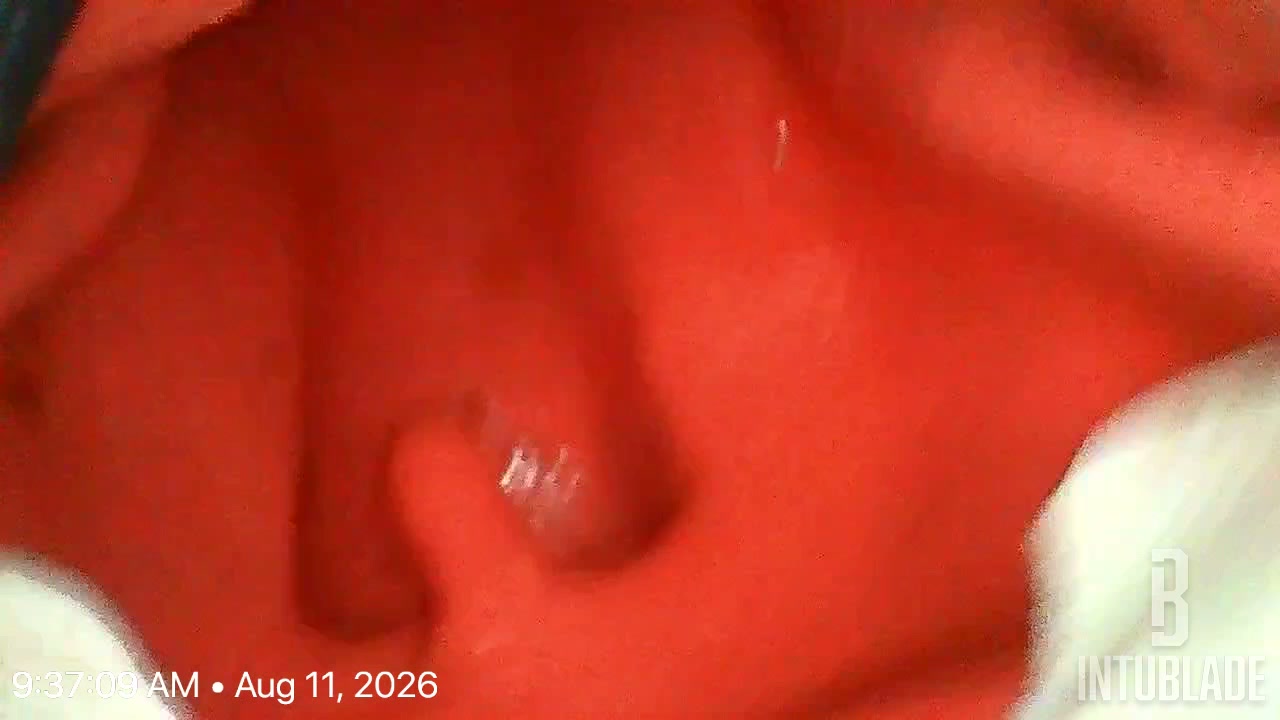
For prehospital airway teams, the best video laryngoscope is the one that is ready on the call, keeps a usable view when the airway is dirty, fits how crews already intubate, and leaves a record medical directors can review.
No product ships from the evaluation form.
01
What “best” means for EMS (not the OR)
An operating room can plan for a clean airway, a dedicated cart, and a reprocessing cycle. A field intubation usually cannot. Evaluate the device against the call, not the suite.
Look for:
Field-ready setup
Open, connect, confirm live view in seconds. No dead blade batteries mid-shift if you can avoid them.
Familiar geometry
Macintosh technique most crews already train.
Soiled-airway plan
Blood, vomit, and fog are common in EMS. A way to clear the lens without pulling out mid-attempt matters.
Portable display
Dedicated handheld or a compatible phone/tablet crews already carry.
QA/QI path
Procedure media that can reach a review workflow after the call.
Fleet economics
Capital handle plus blades vs single-use blade cost. Downtime and reprocessing load.
02
How IntuBlade fits that checklist
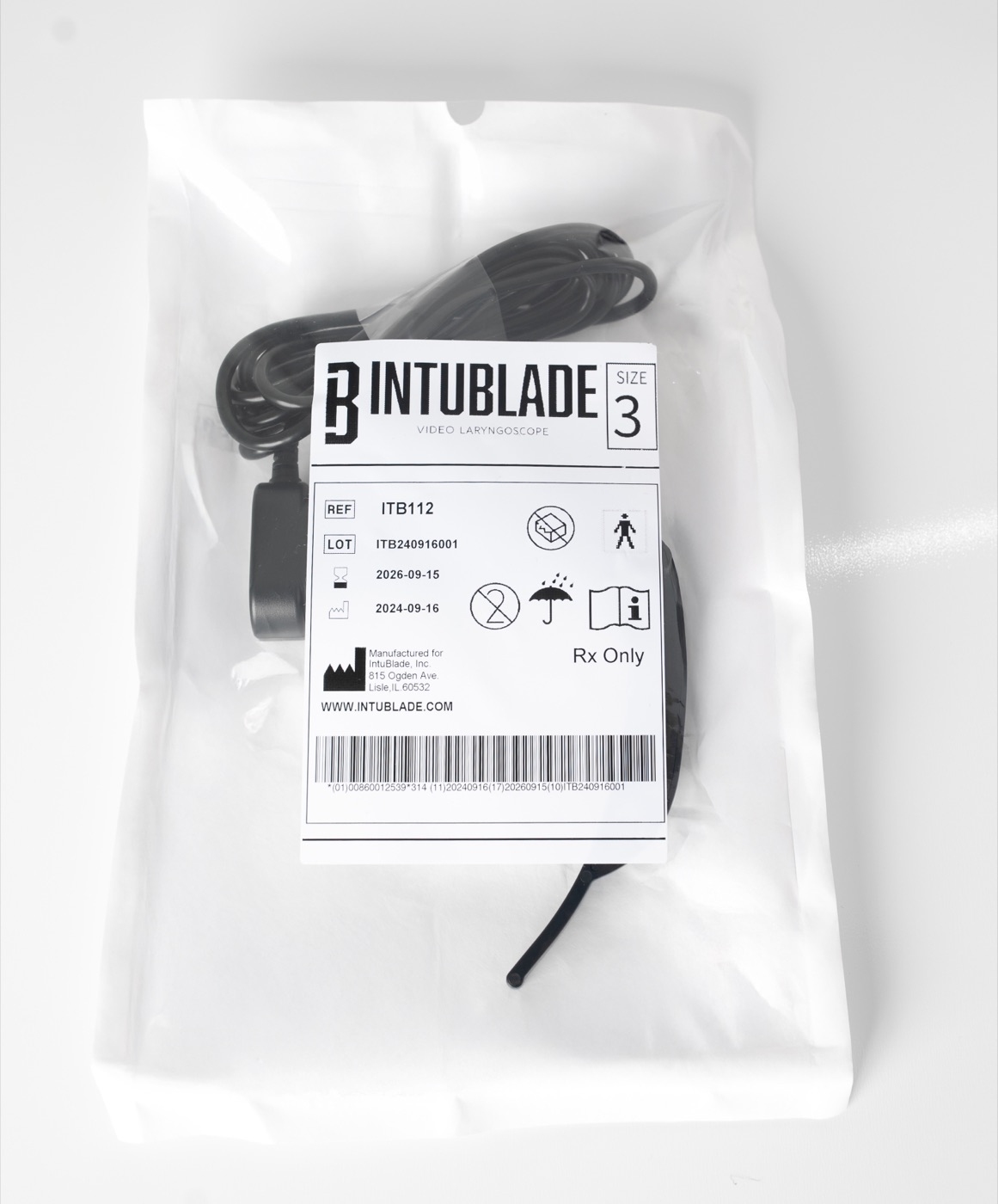
IntuBlade is a single-use Macintosh video laryngoscope for EMS, hospital, flight, military, and training teams. It plugs into a compatible USB-C phone or tablet. A patented Luer-lock port takes a standard 10 mL saline syringe (not included) so the clinician can clear the lens without removing the blade. The IntuBlade app can capture procedure media and route it into the Admin Portal for QA/QI.
- Macintosh Sizes 1–4
- No blade battery to charge. Powered over USB-C
- Single-use. No blade reprocessing
- 3-year shelf life from manufacture
- MSRP $149.95 per blade. Box of 10 $999.50. Volume quotes via sales
Shelf life and pricing as stated on intublade.com. Confirm device compatibility before purchase.
03
Who this evaluation is for
- EMS and fire agencies standardizing video laryngoscopy for field intubation
- Medical directors who want attempts available for review
- Teams comparing dedicated EMS handhelds (e.g. GlideScope Go class devices, McGRATH MAC EMS) to a disposable, phone-connected option
04
Who should keep looking elsewhere
- Programs that require an FDA cleared or approved VL claim. IntuBlade is FDA registered, Class I, 510(k)-exempt, Rx Only. Not FDA cleared or FDA approved.
- Teams that will not use a compatible USB-C phone or tablet as the display
- Teams that need hyperangulated-only geometry as their primary blade family. IntuBlade ships Macintosh 1–4
05
Published simulation evidence (manikin, not patients)
In a 2021 Am J Emerg Med high-fidelity manikin evaluation, 21 emergency physicians intubated in clean and soiled conditions.
Simulation results, not patient outcomes. The authors called for additional clinical evaluation.
Read the methods, results, and limitations| Condition | IntuBlade | GlideScope Ranger | Significance |
|---|---|---|---|
| Clean | 14.3 s | 26.3 s | p = 0.008 |
| Soiled | 19.0 s | 28.6 s | p = 0.004 |
Mean time to successful intubation. High-fidelity manikin, 21 emergency physicians. Am J Emerg Med, 2021.
06
Other names EMS buyers will see
Public EMS and preference pages commonly feature GlideScope (Verathon), McGRATH MAC (Medtronic / Stryker EMS distribution), and C-MAC (Karl Storz). Those systems appear on many “best for EMS” search results today.
IntuBlade’s differences for the same buyer are saline lens clearing mid-attempt, no blade battery, and a USB-C phone or tablet display plus Admin Portal QA/QI. These are product facts. IntuBlade does not claim a ranking in independent EMS surveys.
Next step
Map the phones and tablets your crews carry, the Macintosh sizes you stock, the lens-clearing setup, and the review workflow your medical director wants before a fleet rollout.
No product ships from the evaluation form. IntuBlade is FDA registered, Class I, 510(k)-exempt, Rx Only. Not FDA cleared or FDA approved.